Ehud Landau
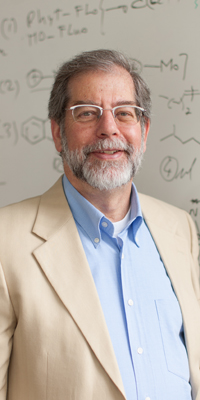
Ehud studied chemistry at the ETH Zurich, and earned his PhD (1988) at the Weizmann Institute of Science in Rehovot, Israel in the area of structural chemistry. With a Rothschild Postdoctoral Fellow-ship, he carried out postdoctoral work in the Department of Chem-istry, UC Berkeley, California and at the Institute of Polymers, ETH Zurich (1988-1992) in the areas of electrochemistry, surface chemis-try and biopolymers. From 1993 to 1999 he was a senior research associate in the Department of Molecular Microbiology at the Biozentrum, University of Basel, working in the area of structural biology of membrane proteins. In 2000, he moved to the USA as Professor in the Department of Physiology and Biophysics at the University of Texas Medical Branch in Galveston, where he established and directed the Membrane Protein Laboratory and was Vice Chairman, as well as Senior Scientist in the Sealy Center for Structural Biology. He also spent time as a visiting Professor at the Institute of Biotechnology, ETH Zurich and at the Paul Scherrer Institute, Villigen. In 2006, he joined us at UZH in the then Institute of Organic Chemistry and quickly set up a research group.
Ehud's research focus at UZH has been on the lipidic cubic phase (LCP) and the development of lipidic matrices for functional and structural investigation of membrane proteins. These concepts have been ap-plied to three fields. In the field of molecular design and synthesis of biologically inspired nanomaterials with novel properties, his group synthesized a series of novel lipids with designed functionalities. The plasticity and flexibility of the bilayers that comprise LCPs allow lipid additives to assemble with mono-acylglycerols to form bicontinuous LCPs. In the area of prebiotic chemistry, tailored lipidic cubic phase host-guest biomaterials were proposed as an alternative semipermeable protocell model. Such molecular systems were shown to sequester sequence-specific DNA within the modified LCP. The use of a lipid pol-ymorph that is stable in bulk water over a large temperature range highlights this protocell model in con-trast to the use of metastable micelle and vesicular models. Thirdly, the group's work in the highly inter-disciplinary field of drug delivery, biosensors and biofuel cells sought robust and stable systems with a potential of high spatial and temporal control of the delivery process. The developed biosensors and biofuel cells are aimed at harvesting membrane proteins with the desired functions.
Ehud Landau retired in February 2019.